Former NSA Technical Director William Binney gave an excellent interview to WBAI radio’s Randy Credico on January 31. What Bill has to say should be REQUIRED LISTENING for those who feel a need for a cogent explanation, in understandable, non-technical language, of how NSA has been playing fast and loose with the Bill of Rights. Bill says the snooping has progressed to the point where the initials NSA now stand for “New Stasi Agency,” because NSA has become the East German Stasi (secret police) on steroids. Those who have seen the 2006 Academy Award winning “The Lives of Others” (Das Leben der Anderen) are likely to have a fuller understanding of the scarcely believable capabilities of today’s NSA and the effects that Stasi-like monitoring are already having on society. (For those who have not seen this film, it may be time you do.)
Randy Credico’s questions tease out the brutally succinct comments that are “typical Bill Binney,” dealing with questions – some of them naive — raised over recent months and years. Why should I care about “parallel construction?” for example; or “What, me worry? I have nothing to hide.” Binney tackles these head on. Ray uses some of the highlights – like “parallel construction” for further comment below:
http://nuarchive.wbai.org/mp3/wbai_170131_170002randyCrelof.mp3
Binney’s segment runs from minute 33:30 to 58:20. (It is preceded by an interesting interview of UK Ambassador Craig Murray – also worth a listen.)
Bulk collection, enabled by technology advances and “authorized” by secret “legal authorities,” effectively neuters the 4th Amendment to the Constitution, while violating the 1st (right to free association) and the 5th (right against self-incrimination), as well. Forget the large file rooms full to the ceiling with stacks of the paper folders used by the old Stasi and J. Edgar Hoover. Today’s data is accurate, timely, complete – and much easier to share and to store. Mind-boggling as it may be, NSA can “collect all,” and scan, read, store it all, as well. And it does.
Binney makes reference to then FBI Director Robert Mueller’s acknowledgement six years ago that the U.S. was collecting and storing information on U.S. persons. In March 2011 testimony to the Senate Judiciary Oversight Committee Mueller said: “We put in place technological improvements relating to the capabilities of a database to pull together past emails and future ones as they come in so that it does not require an individualized search.” And that’s not all Mueller acknowledged.
Parallel Construction
Under “parallel construction,” NSA shares data from its 4th Amendment-violating, bulk-collection to enable law enforcement to play fast and loose with the 5th amendment as well. Illegally acquired bulk collection is shared not only with the police, but also with the FBI, CIA, IRS, DHS, DEA et al. Using the data as tip-off, law enforcement then undertakes to use law-conforming police tactics to arrest, try, convict. Those aware of the illegal provenance of the tip-off evidence are prohibited from telling the accused, defense attorneys, prosecutors, judges, or jury about the information initially used to “construct” an ostensibly legal case.
Thus, as Bill points out, perjury is a major part of “parallel construction,” as well as infringement on the 5th amendment right to due process. He describes the program as “a perjury program run by the Department of Justice,” and notes that the indiscriminate, bulk collection of the wherewithal for the “parallel construction” was “approved” by a secret interpretation of Executive Order 12333, Section 2.3(c) which reads: “Information obtained in the course of a lawful foreign intelligence, counterintelligence, international narcotics or international terrorism investigation”
Parallel construction itself, though, is hardly a secret. Reuters revealed it in 2013. Ray wrote about it in June 2014 after he had a unique opportunity before a large audience at Georgetown University to ask former FBI Director Robert Mueller, who had been in charge of the “parallel construction” program, how he could legally justify it. Mueller explained that “various authorities” had been granted. The user-friendly audience moaned at Ray’s impertinent question. He was asking the FBI Director on what basis he justified violating the Constitution and the law; Mueller’s explanation citing “various authorities” seemed good enough for the vast majority of the audience.
How NSA Can Secretly Aid Criminal Cases
See Something, Say Something; “New Stasi Agency”-style.
Binney comments on current NSA procedures requiring workers to tattle on one another if they see, or think they see, an insider threat. This does not make for a good working atmosphere among colleagues, Bill quips. As for ex-NSA whistleblowers, some current employees of NSA who have tried to contact people like Tom Drake have been summarily fired. Bill explained that this is why he avoids trying to make any such contact, lest it risk the jobs and livelihood of former colleagues.
Ray knows only a few still “on the inside,” so this is not a major problem for him. Many of his fellow retirees who are “back on contract” have not returned his calls or emails for many years now. Sadly, this includes a former colleague and friend who, with other CIA alumni, took part in the founding meeting of Sam Adams Associates for Integrity in Intelligence (See: samadamsaward.ch.) and in presenting its first annual award in 2003). This colleague/friend is even older than Ray, but may be still “back on contract,” so he will remain nameless.) Another former colleague, now a senior CIA official, told Ray that, having bumped into him and exchanged pleasantries at wake for an analyst in Ray’s branch in the 70s, he now “had to report the contact to Security,” since Ray is now a “journalist.”
Storage
For those familiar with how much data can be put on a thumb drive, minds will boggle at how much more storage space is being built – like would you believe 2.5 million square feet right there with NSA and Fort Meade?
The Sam Adams Award
On January 22, 2015 in Berlin, Sam Adams Associates for Integrity in Intelligence gave William Binney its 14th annual award, presenting him with the traditional Sam Adams corner-brightener candlestick holder in symbolic recognition of his courage in shining light into dark places.
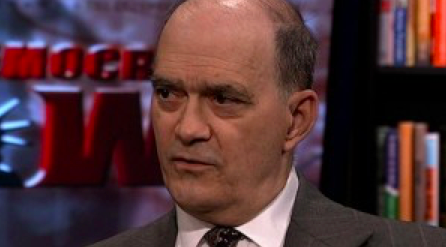
His award citation read, in part:
“Bill Binney represents the patriotic side of a duel between two unequal adversaries: an exceedingly powerful and ruthless state and Bill, an official who would not break his solemn oath to defend its Constitution. … On both sides of the Atlantic we hear the mantra: ‘After 9/11/2001 EVERYTHING CHANGED;’ just like ‘everything changed’ after the burning of the Reichstag in Berlin on 2/27/1933. That event led many Germans into what the writer Sebastian Haffner called “sheepish submissiveness” — with disastrous consequences.
“As a young German lawyer in Berlin at the time, Haffner wrote in his diary one day after the Reichstag fire that Germans had suffered a nervous breakdown. ‘No one saw anything out of the ordinary in the fact that, from now on, one’s telephone would be tapped, one’s letters opened, and one’s desk might be broken into. What was missing, wrote Haffner, was ‘a solid inner kernel that cannot be shaken by external pressures and forces, something noble and steely, a reserve of pride, principle, and dignity to be drawn on in the hour or trial.’
“These traits were NOT missing in Bill Binney. Nor were they missing in Edward Snowden, whose patriotic risk-taking opened the way for Bill and his colleagues to expose the collect-it-all fanatics and the damage they do to privacy everywhere.”
However, we learned at the award ceremony in Berlin that, ironically, it was the other way around; it was Binney who “opened the way” for Snowden – something low-key Bill knew but kept quiet about. It fell to Ed Snowden himself, as he was streamed into Bill’s awards ceremony, to set the record straight: “Without Bill Binney there would be no Ed Snowden,” he said.
Ed explained that it was Binney’s outspoken condemnation of NSA abuses that helped embolden Ed to blow the whistle and make available to Bill and others documentary evidence showing how close the American people were/are to what Ed called “turnkey tyranny.”
Waxing biblical, one might put it this way: Binney begat Snowden; Snowden begat – well, it’s hard to be sure. It does seem altogether possible, though, that Snowden begat the insider(s) who leaked to WikiLeaks the emails showing how Mrs. Clinton and the Democratic National Committee stole the nomination from Bernie Sanders; paid the Saudis back handsomely for their huge contributions to the Clinton Foundation; and told Wall Street it had nothing to fear from her “inevitable” presidency. It is a safe guess that Ed Snowden’s willingness to risk everything to show how close the U.S. is to “turnkey tyranny,” has already inspired – and will “beget” – still other whistleblowers.
Are There More Truth-Tellers?
Surely, there are some courageous patriots – and potential whistleblowers – still in the ranks of NSA and other intelligence agencies today. They, like Binney and Snowden – not to mention other courageous colleagues like Kirk Wiebe, Thomas Drake – may honor their oath to defend the Constitution against ALL enemies foreign and domestic and take some risk to thwart the slide toward Stasi-type tyranny.
A good way for them to begin would be to tell us what to think about former President Barack Obama’s parting shot about “Russian hacking.” Although the “mainstream media” missed this, at Obama’s last press conference (Jan. 18), he admitted that: “the conclusions of the intelligence community with respect to the Russian hacking were not conclusive as to whether WikiLeaks was witting or not in being the conduit through which we heard about the DNC e-mails that were leaked. (Emphasis added)
So Obama went out the door with inconclusive conclusions and admitted that there remains a gaping gap between “Russian hacking” and WikiLeaks. It appears that NSA does not know who gave the emails to WikiLeaks. Is Binney correct in saying that NSA would certainly know about anything “hacked” and sent over the blanket-covered network? Does this prove that leaking was involved, and not hacking – by the Russians or anyone else? This, after all is what Bill Binney – and Ambassador Craig Murray, a friend of WikiLeaks’ Julian Assange, and Assange himself – have been saying for many months.
Ray has been pointing out that, in professional intelligence analysis of highly technical issues, appropriate weight is traditionally given to highly experienced technical experts with a proven record for reliability – as opposed to reporters from, say, the New York Times. Thus, it remains a puzzle why even solid analysts like James Carden wait – as he did in an otherwise excellent recent article – until paragraph 45 (of 50) to mention Binney as author of what Carden labels “an alternative theory” on the Russian hacking story. Carden quotes from a Jan. 5 op-ed in the Baltimore Sun in which Binney says: “It is puzzling why NSA cannot produce hard evidence implicating the Russian government and WikiLeaks. Unless we are dealing with a leak from an insider, not a hack.”
A Reprise of the Iraq-WMD Fiasco?
Just before Mr. and Mrs. Obama got on the departing helicopter, Ray made a stab at decoding the ex-president’s Delphic remark, two days before, in: “Obama admits gap in Russian Hack Case.”
https://consortiumnews.com/2017/01/20/obama-admits-gap-in-russian-hack-case/
But Ray is no longer an “insider,” and technically (no pun intended) neither is Bill Binney. Bill quit NSA in 2001, as soon as he learned that the programs he devised were being changed to enable gross violation of Americans’ 4th Amendment right to privacy. Bill can give interviews to alternative media and appear in documentaries (see below), and Ray can be skunk at picnics – as when he asked questions of congressmen like Adam Schiff, ranking member on the House Intelligence Committee (See the following two-minute clip: https://www.youtube.com/watch?v=SdOy-l13FEg ), but, again, neither Bill nor Ray are “insiders” like the ones in whom Schiff says he places great confidence.
Needed: Another Patriot
Will an inside whistleblower rise to the occasion and clarify the evidence – or lack of evidence – regarding the all important gap – or a link — between Russian hacking and WikiLeaks? And, please, this time let’s not resort to the Rumsfeld aphorism that worked so well with the “WMD” in Iraq – “The absence of evidence is not evidence of absence.”
This is not to beat a dead horse; the horse is very much alive. Extremists like Sen. John McCain have characterized Russian hacking as an act of war, and a very strange bi-partisan assortment of neocons’/Republican Russia-haters’/Hillary-defeat-explainers’ knives are out for Mr. Putin – and for President Trump. California Congresswoman Maxine Waters is now suggesting impeachment proceedings based on the evidence-free notion that Trump assisted the Russian hacking that eased him into the presidency.
A Decent Newspaper Gets Burned; Kahl’s Kool Aid
The only recent sign of hope came this morning, when Germany’s leading newspaper, the Sueddeutsche Zeitung, revealed that Bruno Kahl, head of the German Intelligence, was aping his U.S. counterpart, CIA Director John Brennan, late last year in claiming that the BND had evidence that Russia manipulated the voting for Trump, adding that the Kremlin is interfering in similar ways in Germany. Kahl read from the same script as Brennan and the U.S. “mainstream media,” telling the Sueddeutsche in November: “The perpetrators are interested in delegitimizing the democratic process as such.”
Apparently, the Sueddeutsche felt burned when it learned the truth after drinking Kahl’s Kool Aid and publishing it in November. Today the SZ was the first to publish the conclusion of a yearlong joint inquiry by the German equivalents of the CIA and FBI, which have been searching for evidence of Russian interference in Germany’s domestic affairs. “We have not found any smoking gun,” a German cabinet source told the newspaper.
Like the almost dead horse in Washington, however, the German steed remains kicking. Chancellor Angela Merkel has sent the two spy agencies back to the drawing board. Her office has ordered a new inquiry, this one led by a joint “psychological operations group,” to investigate Russian news agencies’ coverage in Germany. Ray did a short interview on this earlier today: (See: https://youtu.be/A8vjhA9oGzk )
The “Sources and Methods” Canard
As for the facile, all-too-familiar excuse – used by Adam Schiff, for example – that one cannot risk compromising “sources and methods,” there are many effective ways to protect them and still disclose key information, when the situation requires. Ronald Reagan, for example, insisted that a TOP SECRET encoded communication between Libyan operatives responsible for a lethal bombing in Berlin be divulged, in full knowledge the U.S. intelligence capability to intercept and decrypt such communications would be blown (for higher national purpose). See:
A Demand for Russian ‘Hacking’ Proof
If potential whistleblowers need still more inspiration/courage, it will be readily available this month, as movie theaters begin to show “A Good American,” featuring Bill Binney and a handful of his courageous colleague whistleblowers – playing themselves. ( agoodamerican.org/ ) Oliver Stone has given the film high marks, describing it earlier as a “powerful prequel to SNOWDEN.” (Note to NSA employees: remember not to use your own credit card to purchase a ticket.)
We have now wandered a bit from the Bill Binney’s interview on WBAI last week. It may be appropriate to close with a 200 year-old warning from Goethe, a quote that Bill managed to slip into that interview:
“No one is more a slave than he who thinks himself free, but is not.”
“Niemand ist mehr Sklave, als der sich für frei hält, ohne es zu sein*.