“Studebaker!”: The Rise and Fall of a US Industrial Dream and a Forgotten US-Russia Alliance by Tamer Monsour

By Tamer Monsour, July 2, 2026

Despite geopolitical disagreements and the fading of history, human connection and a shared memory of the losses and cooperation during the war—symbolized by the American “Studebaker” truck can transcend the decades and bring people together.

A Russian general who had driven “Studers” through the mud of a war that ate his generation whole gave an American stranger a bear hug because the stranger understood, in Russian, what had been lost and what had been shared.

There is a moment, small and human, that cuts through decades of geopolitical noise like a blade through fog. In April 2015, in Moscow, Ray McGovern, a former CIA analyst who spent 27 years briefing American presidents, attended a ceremony hosted by the Russians. This event marked the 70th anniversary of the Meeting on the Elbe. In April 1945, American and Soviet troops joined hands on a bridge in Germany, realizing together that the war was nearly over.

McGovern had recited Nekrasov’s devastating anti-war poem in both Russian and English. When he stepped back from the podium, a towering Russian general, chest armored in medals, approached.

The general spoke no English. But he took McGovern by the shoulders and said the one word in his vocabulary that bridged the two worlds: “Studebaker! Studebaker!” And then came the Russian bear hug.

The Maidan coup of 2014, backed and celebrated by Washington, was not the beginning of the Ukraine crisis.
It was an accelerant poured onto embers that Western policy had spent years banking

Blacksmith’s Shop to World’s Largest Wagon Maker

The Studebaker story begins, as the best American stories do, with almost nothing. In 1852, brothers Clement and Henry Studebaker opened a blacksmith shop in South Bend, Indiana.

Their starting capital was $68 and two forges. What they possessed in abundance was something that money cannot easily manufacture: the willingness to build things with their hands, better than the next man, and to stand behind what they made. They built wagons. Then thousands of wagons.
By the 1870s, Studebaker was the world’s largest wagon and carriage manufacturer, making tens of thousands of vehicles a year, and supplied more than 100,000 wagons to the Union Army during the Civil War.

They helped outfit the great westward migration of a young nation that was literally building itself out of a raw continent. As historian Thomas Bonsall wrote of Studebaker’s arc, it was “in microcosm, the story of the industrial development of America itself.” This was the capitalism of tangible creation.

Companies built things; they were hubs for communities; they invested in equipment and expertise, and their prosperity hinged on what they produced. The South Bend Studebaker company had no isolated existence but was woven into the fabric of American industrial society, from the blast furnaces of Pittsburgh and the assembly line of Detroit to the shipyards of Baltimore. Looking back, it is astonishing just how completely all of it was disassembled. And, crucially, with the arrival of the automobile, Studebaker did not cede the playing field; it reconfigured it.

It made its first electric car in 1902 and its first gas-powered model two years later. By the 1920s, it stood in total assets behind only Ford and General Motors, an extraordinary position for an Indiana family firm that had started by hammering iron. The company’s strategy was simple and coherent: make durable, quality vehicles at competitive prices, invest in talent, and treat the product with respect. That strategy would define its golden years, and, in a painful irony, make its eventual death at the hands of financial mechanics all the more instructive.

Raymond Loewy and the marriage of Steel and Beauty

The 1930s meant near ruin, bankruptcy in 1933, the Depression, and retrenchment. But Studebaker survived, reorganized, and did something that set it apart from most survivors: it hired a genius. Beginning in 1936, Studebaker hired French-born industrial designer Raymond Loewy, whose impact on the company led to some of the most iconic automotive designs in American history. In the course of the Second World War, the government limited the design of civilian cars for Ford, General Motors, and Chrysler.

Because Loewy’s firm was independent, no such restrictions applied to Studebaker, which permitted it to launch the first all-new postwar automobile in 1947, two years ahead of the Big Three.

Called by automotive historians one of the most beautiful cars ever designed in America, the 1953 Starliner coupe was low-slung, aerodynamic, and almost impossibly elegant for the era. Loewy’s work brought aeroplane styling and aerodynamic principles that would become standard practice throughout the entire auto industry, influencing designers from BMW to Jaguar to Rolls-Royce.

His final collaboration with Studebaker, the Avanti, was so far ahead of its time that it became the only contemporary American automobile placed on permanent display at the Smithsonian Institution. Here was an American company producing objects of genuine beauty, engineering ambition, and durable function, a company treating its products as worthy of serious attention.

The tragedy of what followed is not merely economic. It is civilizational.

That grief in a Russian mother’s heart, and let me surprise you by saying, or a Ukrainian mother’s heart, is worth way more than any geopolitical interest, or have we really lost track of what it’s all about?!

When an Indiana Factory Armed the Red Army

But before the tragedy, there was the war, and a chapter in Studebaker’s history that should be remembered on every anniversary of the Allied victory, in every country that fought one.

During World War II, Studebaker shifted its entire operation to wartime production, manufacturing the US6 truck series, aircraft engines for the B-17 Flying Fortress, and the M29 Weasel amphibious carrier. It manufactured 63,789 Wright Cyclone aircraft engines for the legendary B-17. But its most historically consequential contribution was the US6 truck, a rugged, all-terrain, all-weather 2.5-ton workhorse that became the logistical backbone of the Soviet Red Army’s advance from Stalingrad to Berlin.

Of the 200,000 shipped, the most went to the Soviet Union, where it was the most exported vehicle to the USSR in the Lend-Lease program. The Soviet soldiers called it the Studer and loved it with the sort of devotion soldiers give to equipment that does not let them down when everything else is falling apart. The Studebaker deserves a monument like the T-34 tank, which is honoured everywhere, wrote artilleryman Ilya Maryasin. The truck was indispensable for towing artillery and anti-tank guns, for transporting troops over long distances, and as the basis for the famous Katyusha multiple rocket launchers. “The U.S. Studebaker trucks were a godsend,” recalled signalman Semyon Brevdo.

They came with a steel-cable winch above the front bumper. Having one or two Studebakers in the column was the difference between success and failure.” The truck became affectionately known as the “King of Roads” by Soviet soldiers, and its importance was recognized by Joseph Stalin himself, who sent a personal letter of appreciation to the Studebaker Corporation. The Soviet Union was so impressed by its design that it was closely copied as the ZiS/ZiL 151 and 157 family of trucks, which continued in production until 1966, and the GAZ-51 postwar truck used the Studebaker cab as its direct template.

This is what that Russian general was remembering. Not abstract history. Not a diplomatic communiqué. The Studer: the truck that helped carry his people’s 27 million dead from the killing fields to victory. An American company, from Indiana, of all places, had shown up when it mattered, in iron and steel, and the debt of gratitude had never been fully spoken aloud. Until McGovern recited a Russian poem in Moscow, and a general found the one English word he needed.

The Great Unraveling: How Wall Street Devoured the Builders

The postwar decades began with genuine brilliance. Studebaker reached its peak of prosperity in 1950, with record sales and a four-percent market share. But the structural pressures that would eventually hollow out American industrial civilization were already assembling. The Big Three (General Motors, Ford, Chrysler), had resources Studebaker could never match. Defense contracts dried up after Korea. And most fatally, in its rush to take advantage of the strong postwar market, Studebaker failed to modernize its plants, reduce production costs, or correct worsening product quality.
In December 1963, Studebaker shuttered its South Bend plant, ending American car production. Its Canadian operations limped on until 1966, and the company itself vanished entirely from the American business scene by 1979. A company that had existed for 111 years, that had helped settle the American West, supplied the Union Army, armed the Red Army, and produced the most beautiful cars of its generation, was gone. Absorbed, fragmented, dissolved into conglomerates.

The Studebaker ending was a harbinger. What killed the independent American industrial company was not incompetence. It was a structure, a financial system that increasingly rewarded short-term returns over long-term investment, that punished capital-intensive manufacturing and celebrated asset-light speculation, that valued the extraction of value over its creation.

By the 1970s, the transformation had become structural and intentional. In 1980, the financial industry accounted for only 6 percent of corporate profits in the United States. Today it accounts for close to 50 percent. Meanwhile, manufacturing now accounts for just 12 percent of the US economy, down from a peak of 28 percent in 1953. The idea that companies exist primarily to create value for shareholders became the dominant management philosophy.

Public markets demanded that corporations focus on “core competencies” and divest everything else. This resulted in asset-light organizations with fewer employees, less diversity, and less vertical integration.

The number of manufacturing plants in America with more than 5,000 workers fell from 192 in 1977 to only 49 in 2007. South Bend, Indiana, a city that once had one of the largest manufacturing complexes in the world, built the wagons for westward expansion and the trucks that drove the Wehrmacht back through Ukraine. It became a cautionary tale of the Rust Belt.
What Studebaker’s demise previewed, the broader American economy subsequently confirmed: a civilization that once built things for the world had chosen, through deliberate policy and financial incentive, to extract money instead. And it called this progress.

From Allies to Adversaries: The Cold War’s Original Sin

The same postwar decades that saw American industrial capitalism begin its long financial mutation also saw the burial of the wartime alliance.

The men who met on the Elbe in 1945, who had fought on the same side, died in a common cause, equipped each other with trucks and aircraft and food, were swiftly reconfigured as existential enemies. The Cold War was, among other things, a machine for forgetting what cooperation had made possible. What followed across seven decades does not need to be rehearsed in full detail here. The key point is that NATO’s post-Cold War expansion, its deliberate, documented advance toward Russia’s borders in defiance of explicit assurances given to Soviet and then Russian leadership at the Cold War’s close, was not a defensive reflex.

It was a strategic choice, made by Western elites who had decided that American primacy, rather than a genuine security architecture, was the organizing principle of the post-Soviet world. The Maidan coup of 2014, backed and celebrated by Washington, was not the beginning of the Ukraine crisis.
It was an accelerant poured onto embers that Western policy had spent years banking. The general who gave McGovern a bear hug in 2015 was already living in a country that had been told, clearly and repeatedly by NATO expansion, that its security concerns were irrelevant. That the wartime alliance was not a precedent for partnership but merely an inconvenient historical memory. That the country which had absorbed 27 million deaths defeating Nazism should now accept a military alliance on its doorstep as the price of “Western values.”

The Tears That Do Not Forget

On June 22, 2016, the 75th anniversary of the Nazi invasion of the Soviet Union, a day that President Putin called “a lump in the throat,” ex-CIA officer Ray McGovern stood in Yalta, Crimea, with a small group of American citizens invited by Russian hosts. It was, as he noted, the first unofficial American delegation welcomed since the US-backed Maidan coup in Kyiv had cut many ties between the two peoples.

He was asked to speak, so he recited the same Nekrasov poem he had shared in Moscow. Nikolay Nekrasov was a 19th-century Russian poet known for his moving verse about the suffering of ordinary Russian people, which made him a hero among the intelligentsia.

His poem about war, written in another century, about other wars, was written for every war. Including the ones not yet fought. Including this one. McGovern recalled the mothers and widows in the audience who were old enough to have lived what the poem described. We close with that poem, in the original Russian, and in McGovern’s own translation, because it says something that no geopolitical analysis can say:

Николай Некрасов “Внимая ужасам войны”

Внимая ужасам войны,
При каждой новой жертве боя
Мне жаль не друга, не жены

Мне жаль не самого героя.

Увы! Утешится жена,
И друга лучший друг забудет;

Но где-то есть душа одна –
Она до гроба помнить будет!

Средь лицемерных наших дел

И всякой пошлости и прозы
Одни я в мире подсмотрел

Святые, искренние слезы –
То слезы бедных матерей!
Им не забыть своих детей,

Погибших на кровавой ниве,

Как не поднять плакучей иве

Своих поникнувших ветвей.

Heeding the horrors of war,
At every new victim of battle
I feel sorry not for his friend, nor for his wife,
I feel sorry not even for the hero himself.
Alas, the wife will be comforted,
And best friends forget their friend;
But somewhere there is one soul
Who will remember unto the grave!
Amidst the hypocrisy of our affairs
And all the banality and triviality
Unique among what I have observed in the world
Sacred, sincere tears –
The tears of poor mothers
They do not forget their own children,
Who have perished on the bloody battlefield,
Just as the weeping willow never lifts
Its dangling branches.

A Russian general who had driven “Studers” through the mud of a war that ate his generation whole gave an American stranger a bear hug because the stranger understood, in Russian, what had been lost and what had been shared.

That transaction was worth more than every NATO summit communiqué combined. That grief in a Russian mother’s heart, and let me surprise you by saying, or a Ukrainian mother’s heart, is worth way more than any geopolitical interest, or have we really lost track of what it’s all about?!

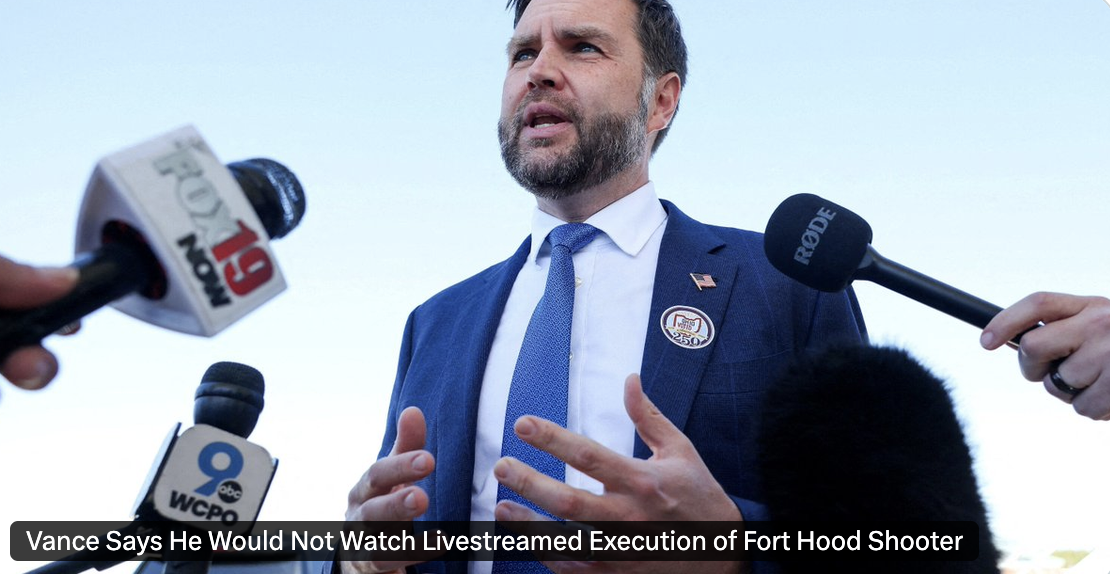
McGovern recalled that revelatory moment in a recent interview with dark irony. “I’ll bet,” he said, “that JD Vance doesn’t know what that was all about.”

But we know what it’s about.
WE DO KNOW.

Tamer Mansour, Egyptian Independent Writer & Researcher

https://journal-neo.su/2026/07/02/studebaker-the-rise-and-fall-of-a-us-industrial-dream-and-a-forgotten-alliance/

Pope Punts with Platitudes, As Millions Watch

By Ray McGovern, July 3, 2026

The International Peace Coalition asked me to comment on Pope Leo’s speech to those celebrating the 250th anniversary in Philadelphia this morning.  It was barely an hour after he spoke; I stand by my candid remarks. Nice guys do not make good prophets.

Christians must speak loud & clear, so not the slightest doubt about the evil of war can arise in the heart of the simplest man. Popes should forgo abstractions & confront the blood-stained face history has taken on today.” (Camus, 1948) Did Pope Leo meet that standard today?

Judging Freedom: Can Zelensky Goad Putin to Overact?

Putin today on Ukraine: Attacks on our energy facilities create shortages but have no impact on the front. That is the key point. New proposals to curb air strikes and ground operations keep coming. They are disingenuous. Still, we give them due attention.


Paying Attention to the Horrors of War

On June 22, 2016, the 75th anniversary of the Nazi attack on Russia, I was in Yalta, Crimea, with an American citizens’ delegation. I was asked to speak on behalf of our group at a major ceremony.  It was an appropriate occasion to recite Nikolai Nekrasov’s “Giving Attention to the Horrors of War.”

I shall not forget the poignant experience of personally witnessing, and feeling, just why Nekrasov is called “the poet of Russian grief.”  In the audience were several mothers, widows, best friends old enough to have experienced WWII in one way or another.

On Monday June 22, 2026, during an interview with Glenn Diesen, I was able to mark the occasion again by reciting Nekrasov’s poem. Here is an excerpt from that interview:


See the entire interview here: https://youtu.be/Xgcv0PiLJTY?si=ZGq1iF7fV8rudRmr


A fellow member of our US delegation to Crimea noticed the Diesen interview and fished out a video he made of the occasion. For those interested, you can get some idea of the Yalta remembrance in this video:


Poetry always loses something in translation, and my attempt, of course, is no exception. I have tried to be literal without undue sacrifice to verse and feeling. Nevertheless, a lot is lost.


Внимая ужасам войны,
Heeding the horrors of war,

При каждой новой жертве боя
At every new victim of battle

Мне жаль не друга, не жены
I feel sorry not for his friend, nor for his wife,

Мне жаль не самого героя.
I feel sorry not even for the hero himself.

Увы! утешится жена,
Alas, the wife will be comforted,

И друга лучший друг забудет;
And best friends forget their friend;

Но где-то есть душа одна –
But somewhere there is one soul –

Она до гроба помнить будет!
Who will remember unto the grave!

Средь лицемерных наших дел
Amidst the hypocrisy of our affairs

И всякой пошлости и прозы
And all the banality and triviality

Одни я в мир подсмотрел
Unique among what I have observed in the world

Святые, искренние слезы –
Sacred, sincere tears –

То слезы бедных матерей!
The tears of poor mothers!

Им не забыть своих детей,
They do not forget their own children,

Погибших на кровавой ниве,
Who have perished on the bloody battlefield,

Как не поднять плакучей иве
Just as the weeping willow never lifts

Своих поникнувших ветвей.
Its dangling branches


“Russia is Losing” – We’ve heard this before by Leonid Ragozin

Ukraine has launched a string of high profile drone strikes on Moscow, St Petersburg and oil refineries. Commentators are, once again, claiming Russia is losing the war. But is it? We have been here before. 


Ukrainian drone strikes on transport links and fuel depots have succeeded in creating acute fuel shortages and blackouts across the Russian-occupied Crimean peninsula. Additionally, an attack on the Kapotnya oil refinery in Moscow last week has produced spectacular footage of fumes rising above the Russian capital and headlines like “Moscow is on fire”.


Pro-Ukrainian cheerleaders in the West claim that these events manifest a “turning point” in the war and that Russian setbacks will increase domestic pressure on Vladimir Putin, eventually forcing him to change his calculus. “Russia is losing” headlines appeared in the Guardian and on the CNN website. The same trope is being repeated by commentators on the subject, like former commanding general of US Army Europe Ben Hodges. “I think Russians see they are losing the conflict with Ukraine”, he told UATV channel in May.


We’ve been here before. On May 3, 2023 a drone hit the roof of Senate building inside the Kremlin – a large cupola that protrudes above the Lenin mausoleum and serves as Russia’s main flag post. The attack was symbolic in nature since the damage was minimal, but it was meant to show that Moscow wasn’t safe.


Back at the time, Ukraine denied its involvement in the incident, pointing at previously unknown “guerrilla forces” as culprits, but one of the chief government spokesman, Mikhailo Podoliak delivered the key infowar narrative by writing on Twitter: “The loss of power control over the country by Putin’s clan is obvious”.


The spring of 2023 was the time of great Ukraine optimism. After liberating large chunks of occupied territory in Kharkiv and Kherson regions in the fall of 2022, Ukrainian military commanders, aided by British and American war planners, were preparing a major counter-offensive aimed at liberating the Azov Sea region and Crimea.


Hopes of defeating Russia militarily ran high. “I expect Ukraine will liberate Crimea by the end of this summer”, Hodges told the Caucasian Journal in January 2023. A month earlier he told the BBC that “all the momentum is with Ukraine now and there is no doubt in my mind that they will win this war”.


Ukrainian leaders were also giving lofty promises of a soon victory. Ukrainian President Volodymyr Zelenskiy said he was planning a holiday in Crimea. The head of Ukraine’s military intelligence, Kyrylo Budanov, who currently serves as Zelenskiy’s chief of staff, claimed that Russia was about to run out of missiles, that Putin was dying from serious illness and that Ukrainian troops would be in Crimea by summer.


These sentiments were fueled by Ukraine’s perceived technological advantage. It was evident that while Ukraine had already stepped into the drone war epoch, Russia was still fighting an old-school war of tank columns and wasteful large-scale assaults with no regard for the lives of its soldiers.


Besides, Western powers became less reluctant to provide cutting-edge weapons that Ukraine lacked. The Franco-British Storm Shadow missile was used for the first time on May 17, 2023 – two weeks after the Kremlin drone attack. The missiles would create havoc in the Russian rear, with Russia looking helpless and unable to devise an antidote.


Finally, in June that year, Russia was rocked by the uprising of the Wagner mercenary army which marched on Moscow demanding the removal of defence minister Sergey Shoygu. This is when “Russia is finished sentiments” peaked.


“Russia’s weakness is obvious. Full-scale weakness”, Zelenskiy said at the time. Chess champion Garry Kasparov stated confidently that Putin was doomed: ”Putin’s regime is entering its final, chaotic chapter.” Hodges said that Russian army was “in terrible state” and that Russia was sliding into civil war.


But this whole PR bubble unravelled within months. The poorly planned Ukrainian counteroffensive achieved meagre results – no strategic or even tactical breakthroughs whatsoever. Russia successfully adapted to the drone war and over some time scaled up the production of increasingly sophisticated drone models, becoming one of world’s leading drone production powers. Its offensive eventually resumed, resulting in the frontline moving away from the Russian-occupied Donetsk by some 120km in the southwest and some 50km in the north, as it stands now. It adapted to Storm Shadow strikes as well.


Expectations: From great to modest


The same cycle of victorious battle cries and lofty promises repeated itself when Ukrainian forces managed to occupy a large chunk of Russia’s Kursk region in 2024. But it didn’t help to end the war on Ukrainian terms either.


What’s most telling is the evolution of expectations which accompany each of these cycles. The current ones are pretty modest. What Ukraine is primarily trying to achieve with the current surge is ceasefire along the existing frontline, without the need to withdraw troops from the smaller chunk of Donetsk region still under Ukrainian control which Russia insists on.


It also wants to freeze the conflict rather than submit to Russian demands that includes genuine non-alignment, a cap on the size of the armed forces and weapons, guaranteeing Russian language and church rights and disbanding far right units.


If Ukrainians leaders heard someone campaigning for frozen conflict a few years ago, they’d brand them Kremlin’s stooges. Even after his failed counteroffensive, Zelenskiy passionately warned against freezing the conflict in his Davos speech of 2024: “Putin is a predator who is not satisfied with frozen products… We can beat him on the ground. We have proved it. And at sea and in the skies.” His Security Council chief at the time, Oleksiy Danilov, said “freezing the war means handing a victory to Putin”.


Downgrading expectations have been a major feature of this conflict since the outset of Russia’s all-out invasion and before that. At the point when the buildup to the invasion began, the two sides were in the state of de-facto ceasefire achieved as result of the December 2019 summit between Putin and Zelenskiy. Russia controlled only smaller portions of Donetsk and Luhansk regions. Ukraine still had the access to the Sea of Azov and controlled Mariupol.


But as soon as Biden entered the White House in January 2021, Ukraine and its Western allies attempted to alter the Minsk peace framework, still valid at the time, in Ukraine’s favour by exerting pressure on Russia on all fronts. Some observers described the strategy as securing “a better Minsk”.


This triggered a period of dangerous brinkmanship which culminated in the all-out Russian invasion. The effort was accompanied with a PR campaign striving to prove that an all-out war with Russia was potentially winnable with modern hi-tech weapons, such as Turkish Bayraktar drones.


Sense of purpose


Now we are back to square one whereby Zelenskiy and allies are seeking what essentially is another Minsk. Only this is happening after four and a half years of sheer devastation, huge population and territorial losses. The question of what have Ukrainians been making this sacrifice for is looming large over the entire story.


Maybe Ukraine and allies have finally devised a magic wand that will force Putin to surrender, but history shows that each of Ukraine’s victorious cycles results in two outcomes.


The first one is Russia’s adaptation. For example, the Ukrainian success in Crimea is largely explained by Ukrainian drone technology marrying Elon Musk’s Starlink terminals and targeting systems provided by Palantir. But Russia is not sitting idly – it has started launching its constellation of satellites called Rassvet, which is analogous to Starlink. It is also integrating AI technology in its drone fleet. As for the strikes on its oil refineries, Russia can learn from Ukraine which has adapted its fuel production after devastating Russian strikes during the early stages of war.


The other outcome is escalation. The attacks on vital Russian energy infrastructure brings us closer to the nuclear threshold as per the Russian military doctrine. The far more direct Western involvement in the conflict, like Palantir’s targeting role in Ukraine’s deep strike in Russian territory, is making Russian retaliation against Nato countries more possible.


But what these cycles manifestly don’t active is forcing Putin to change its calculus. Like in the good old days of Prigozhin’s mutiny, the latest pro-Ukrainian PR surge revealed that a number of senior politicians and commentators still believe that Putin’s policies could be changed by increasing the costs for Russian society which he has been shielding from the worst excesses of war for year.


But the rabidly xenophobic tone of anti-Russia propaganda Western psyops and stratcom units adopted from the outset of the conflict on major social networks accessed by Russians killed this possibility from the very beginning. The incessant attacks online mob attacks against the Russian opposition in particular showed to which extent the pro-war camp in the West is not interested in a democratic Russia friendly to its neighbours, only in a perpetual conflict.


Now Donald Trump’s war in Iran and the genocide unleashed in Gaza of the United States’ best known proxy, Israel, is providing Russian society with a sense of purpose which it indeed lacked at the start of Putin’s aggression.


Russia in 2026 is not the Russia of 2023. It is a society that’s better adapted and more resigned to a long war. Dramatic footage from Tehran, Gaza and Lebanon does a much better work in terms of illustrating the price of weakness than Kremlin’s propaganda tropes about “nazified” Ukraine. Iran’s success in repelling Trump, at least so far, shows them that there is a path forward.

https://www.intellinews.com/ragozin-russia-is-losing-we-ve-heard-this-before-450224/?source=russia

Leonid Ragozin is a freelance journalist based in Riga. Formerly at the BBC, Newsweek and Lonely Planet Guides. He tweets @leonidragozin

Will Russia Escalate? Will Trump Stick it to Israel?

Is Trump “stuck” – the word we used when our jalopy ran out of gas. Clearly, he needs the Strait of Hormus unstuck. So, will he stick it to Israel if Israel tries to sabotage the US-Iran talks by attacking Lebanon? On Ukraine, has the Spirit of Anchorage expired?