Tyrel Ventura of “Watching the Hawks” interviewed Ray McGovern on January 10, giving Ray a chance to point out how Donald Trump apparently was administered the initiation-rite-for-presidents-elect — with rubrics designed by former FBI Director J. Edgar Hoover. It seems highly likely that then-FBI Director James Comey rendered a good impersonation of Hoover on January 6, 2017, when he briefed President-elect Trump on the scurrilous “Steele dossier” that the FBI had assembled on Trump.
The interview with Ray is the first segment. (12 and a half minutes)
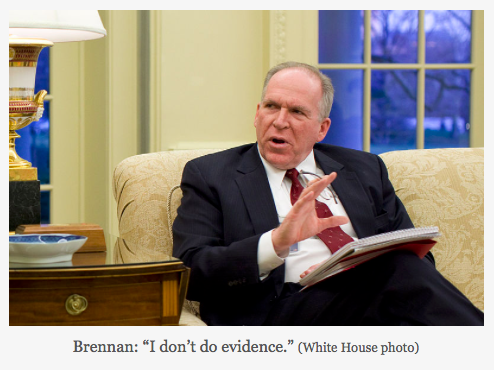
To dramatize the sensitivity of the dossier, Comey asked National Intelligence Director James Clapper and the heads of the CIA and NSA to leave Comey alone with the President-elect, after the Gang of Four briefed Trump on the evidence-impoverished “Intelligence Community Assessment” alleging that Putin himself ordered his minions to help Trump win. The ICA was published that same day. The dossier had been leaked to the media; Buzzfeed published its text on Jan. 10.
Apparently, it took Trump four months to realize how he was being played, and that he could not expect the “loyalty” he is said to have asked from Comey. So Trump fired Comey on May 9. Two days later he told NBC’s Lester Holt:
“When I decided to just do it, I said to myself, I said, ‘You know, this Russia thing with Trump and Russia is a made-up story, it’s an excuse by the Democrats for having lost an election that they should’ve won.’” The media and Russia-gaters immediately seized on “this Russian thing” as proof that Trump was trying to obstruct the investigation of Russian interference with Trump campaign collusion in the 2016 election. During the interview with Lester Holt, it seems more likely that was thinking back on Comey’s J. Edgar Hoover-style, one-on-one gambit with Trump on January 6, 2017.
Would Comey really do a thing like that? Was the former FBI director protesting too much in his June 2017 testimony to the Senate Intelligence Committee, when he insisted that he had tried to make it clear to Trump that briefing him on the unverified but scurrilous information in the dossier wasn’t intended to be threatening. Whatever. In any event, it seems clear that after a few months, Trump was able to reason to what he decided Comey was up to.
“… Look what they did to me with Russia, and it was totally phony stuff. … the dossier … Now, that was totally made-up stuff … I went there [to Moscow] for one day for the Miss Universe contest, I turned around, I went back. It was so disgraceful. It was so disgraceful.
“When he [James B. Comey] brought it [the dossier] to me, I said this is really made-up junk. I didn’t think about anything. I just thought about, man, this is such a phony deal. … I said, this is — honestly, it was so wrong, and they didn’t know I was just there for a very short period of time. It was so wrong, and I was with groups of people. It was so wrong that I really didn’t, I didn’t think about motive. I didn’t know what to think other than, this is really phony stuff.
“I think he shared it so that I would — because the other three people [Clapper, Brennan, and Rogers] left, and he showed it to me. … So anyway, in my opinion, he shared it so that I would think he had it out there. … As leverage.
“Yeah, I think so. In retrospect. In retrospect. You know, when he wrote me the letter, he said, “You have every right to fire me,” blah blah blah. Right? He said, “You have every right to fire me.” I said, that’s a very strange — you know, over the years, I’ve hired a lot of people, I’ve fired a lot of people. Nobody has ever written me a letter back that you have every right to fire me.”
So How did those damaging DNC emails get to WikiLeaks?
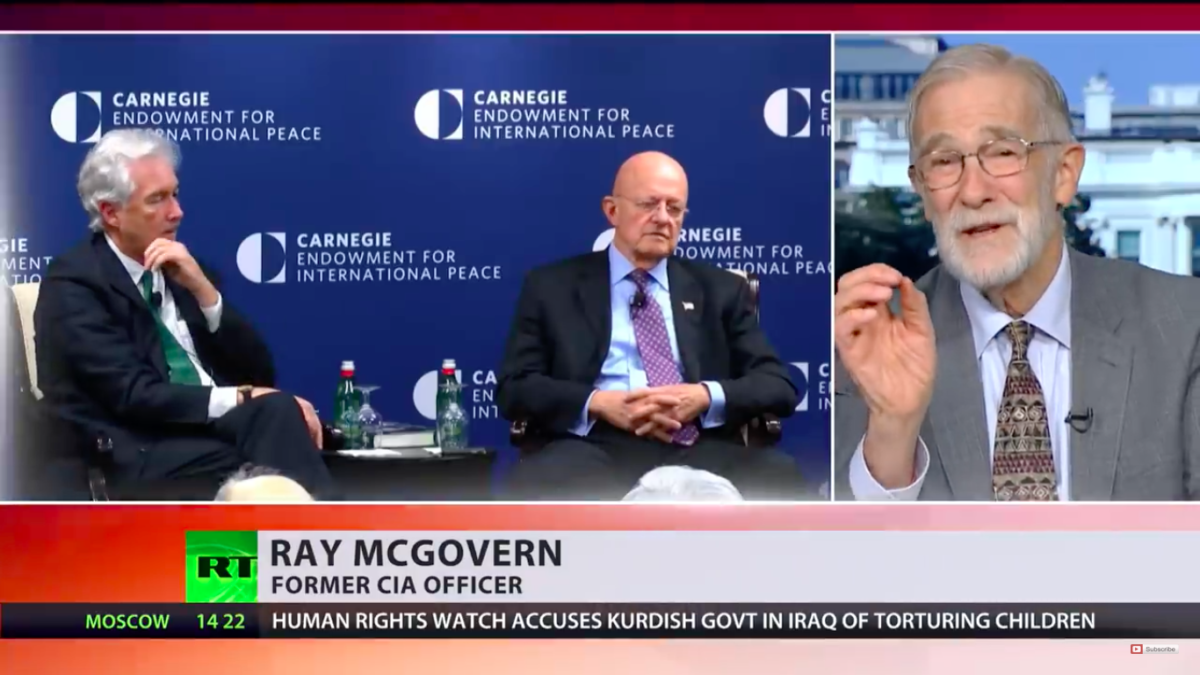
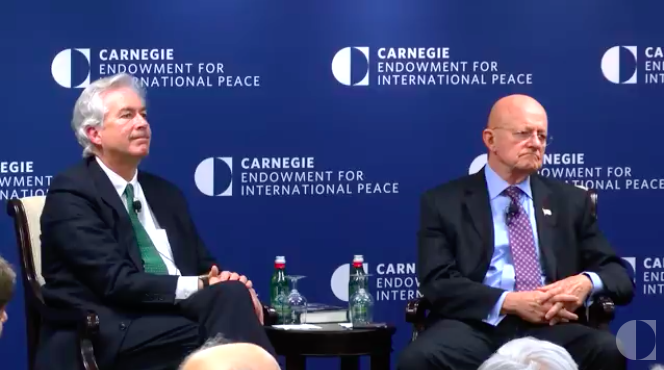
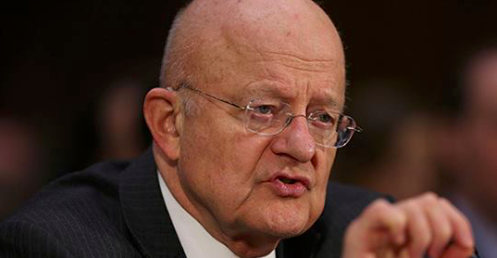
After plugging his memoir at the Carnegie Endowment in November, ex-National Intelligence Director Clapper said he had “no doubt” that the Russians did it — those same Russians whom he has described as “almost genetically” deceitful. Clapper backed down a bit later, saying he’s “pretty sure” the Russians did it.
Ray summed up VIPS’s findings during the two and a half minutes RT gave him on Jan. 10, 2019.
The segment with Ray runs from minute 3:05 to 5:30.
Clapper claims before a typically under-informed audience that his case rests largely on “forensics.” But how many listeners would know, or remember, that the FBI avoided doing forensics on the DNC computers (as former FBI Director James Comey sheepishly admitted under oath). Curious.
Even outgoing President Obama, who almost always showed himself to be putty in the hands of intelligence gurus, refused to play along with their whole story, admitting that he remained far from convinced on one key aspect of what has become “Russia-gate.” On Jan. 18, 2017, just two days before leaving town, Obama told a press conference that the “conclusions of the intelligence community” regarding how such sensitive material got to WikiLeaks were “inconclusive.”
Now why would the “mainstream media” have missed that?
Obama’s words came less than two weeks after Clapper and the heads of the CIA, FBI, and NSA had fully briefed him on the misnomered, evidence-impoverished “Intelligence Community Assessment” dated Jan. 6. That flawed piece of analysis drafted by “handpicked analysts” pretended to serve up what would be seen as conclusive conclusions on that critical point. Answering Ray’s question on Obama being out of step on this at Carnegie, Clapper said: “I cannot explain what he [Obama] said or why. But I can tell you we’re, we’re pretty sure we know, or knew at the time, how WikiLeaks got those emails.”
Right. Now it’s “pretty sure.”
The prior three minutes of the RT program deals with yet another case of “Russian hacking” that, it turns out, “really wasn’t there” — this time during the recent Senate race in Alabama. That segment is also worth watching.
In giving wider dissemination of Ray’s Jan. 10 article on Pelosi and impeachment (immediately below), opednews.com includes the full text (not just a link) to Ray’s earlier, more detailed account of the July 2007 “audience” with John Conyers.
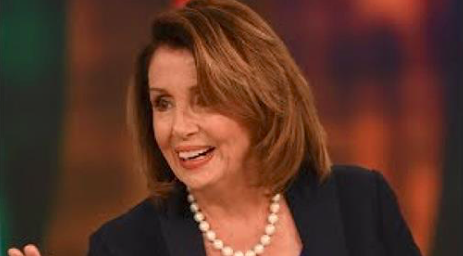
If House Speaker Nancy Pelosi trashes the Constitution by not allowing Jerold Nadler, D, NY, chair of the Judiciary Committee, to begin impeachment proceedings against President Donald Trump, the Constitution will become, in effect, what George W. Bush called it in 2005 — “just a goddamned piece of paper.”
The crucible is now — today, when it appears likely that Trump will declare a state of emergency to usurp the sole authority given to Congress to appropriate funds — all of this simply to satisfy his Captain-Ahab obsession to build a wall on the southern border.
Pelosi is not a profile in courage. She chickened out when the Democrats won back the House in 2006. She would not allow impeachment for reasons both crassly political and personal.
After the life of Casey Sheehan, peace activist Cindy Sheehan’s son was squandered in Iraq early in the war and Cindy insisted that Bush explain the “noble cause” for which Casey died, then-Congressman John Conyers, D, Michigan, offered her more sympathy than many of his colleagues did. After Conyers regained his chairmanship of the House Judiciary Committee, he agreed to meet Cindy in July 2007.
Cindy got permission to include Rev. Lennox Yearwood and me at the meeting in Conyers’s office in the Rayburn Building. It turned out to be a very instructive experience, the upshot of which seems likely to re-occur today as President Donald Trump abuses the Constitution in as flagrant way as imaginable. Consortium News published my account of that meeting. https://www.consortiumnews.com/2007/072407a.html It may be worth a re-read.
Political Reasons
After we congratulated Conyers on winning back his chairmanship, we suggested that he start the process of impeaching then-President Bush. We were astonished that he seemed taken aback that we would suggest such a thing. His first reason for inaction was a suggestion that he would not be able to get the votes in the House. We thought that was bogus, and I said so.
Conyers then proceeded to explain what he said was the real reason: “Nancy [Pelosi] has ruled out impeachment.” When we asked why, Conyers explained “Nancy says that if we appear divisive, Fox News will have a field day, and we Democrats will not win as big in the next election.”
I reminded Conyers that the Founders anticipated that a president could well start acting like a king, and to prevent that they mentioned the orderly political process of impeachment no fewer than six times in the Constitution. And I shocked Conyers’s four lawyers in the room by saying, “Mr. Conyers, it is your duty as head of the Judiciary Committee to begin to impeach. You will find it easy to get the votes.”
It was immediately clear that people are not supposed to talk like that to a committee chair. When we refused to leave his office, he called the Capitol Police and we were quickly arrested. I insisted on being arraigned; it is the only time I have been convicted; I am proud to tell my grandchildren about it.
In retrospect, it was an important juncture. War criminals Bush, Cheney, and the others responsible for what the post-World War II Nuremberg Tribunal branded “the supreme international crime,” a war of aggression, with its “accumulated evil” (think torture, for example) were to be let off scot free so the Democrats could “win bigger” in the next election.
I was surprised not only at Speaker Pelosi’s justification for failing to discharge her duty to the Constitution, but also that Conyers would nonchalantly instruct us on that political reality, as though we would surely understand. All that was quite bad enough.
Pelosi’s Personal Reasons
When I shared our Conyers encounter with those in Veteran Intelligence Professionals for Sanity who had been senior officials at the National Security Agency, they smiled and told me that I did not know the half of it. They reminded me that the CIA and NSA have the book on Nancy Pelosi — and, of course, not only on her. Their procedure is to write up memoranda of conversation immediately after briefing the two top members of the intelligence “oversight” committees and also the two top members of the House and Senate leadership.
You are unlikely to see it in the New York Times, but it is on the record that she was briefed early not only on the massive illegal surveillance of American citizens but also on the CIA’s “enhanced interrogation techniques.” The Deep State can always pull those memcons out of the file, leak them to the media, and destroy the reputations and political careers of people like Pelosi whom they cleverly render complicit.
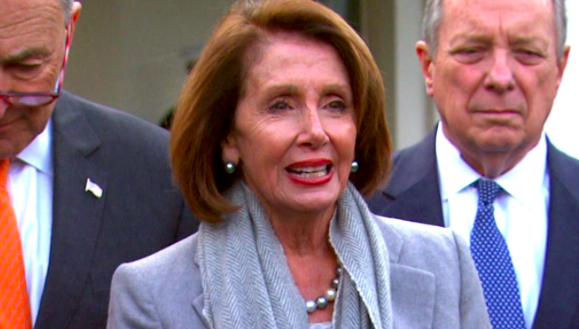
In May of 2009, with Barack Obama as president and disclosures about torture hot and heavy, Pelosi held a press conference in which she claimed that the intelligence people “mislead us all the time.” https://www.youtube.com/watch?v=lYwZa8jvNp4 Her body language shows better than words can convey that she had guilty knowledge of the torture techniques and that she did not demur. As the video clip shows, she utterly failed to overcome the skepticism of those in attendance.
Blackmail potential remains for the CIA, NSA, or the FBI to put into play as they see fit. So does the fear of appearing “divisive.” What will Nancy Pelosi feel it is politically and personally wise to do at this key juncture, with the very Constitution at stake? We should know soon.
Ray McGovern works for Tell the Word, a publishing arm of the ecumenical Church of the Saviour in inner-city Washington. A CIA analyst for 27 years, in January 2003, he co-founded Veteran Intelligence Professionals for Sanity and remains on its Steering Group.
Fat and skinny had a race, all around the Middle East; each fell down, lost still more face; and neither won the race.
The twin travels around the Middle East of Secretary of State Pompeo and national security adviser John Bolton would be high comedy, were killing and destruction some kind of game. They are on tour to ’splain to U.S. vassal states what their boss really meant about withdrawing U.S. troops from Syria. (Psst. In case you haven’t heard, Trump didn’t really mean what he said.)
As they hustle from capital to capital, here are two takeaways:
1 — President Donald Trump is not his own man (as if confirmation of that piece of reality were needed at this point); and
2 — You can get all A’s at the U.S. Military Academy (as Pompeo did), learn little to no history, become a know-nothing politician, and flunk life —ruining a lot of other lives in the process. And you can major in political science at Yale and graduate summa cum laude (as Bolton did), and the realities you learn about the Middle East boil down the “obvious” need for the U.S. to dominate the area and “walk in lockstep” with Israel. (Those are the words President Obama used as 100 million viewers watched him being interviewed immediately before the Super Bowl in 2012.) The Yale Law School alumnus spoke with ironic candor — ironic in the sense that his use of “lockstep” betokens a remarkable insensitivity to the history of blacks on chain gangs in the South.
(“Lockstep?” What does Webster’s say of “lockstep?”
noun:
1 a mode of marching in step by a body of men going one after another as closely as possible;
2 a standard method or procedure that is mindlessly adhered to
adjective:
in perfect, rigid, often mindless conformity or unison.)
Former Secretary of State John Kerry also majored in political science at Yale, four years before Bolton. It became gradually clear that — like Obama and Bolton — Kerry too thought the U.S. could “align” the various forces in the Middle East because … well, it was a mixture of hubris and ignorance. Let Kerry’s own words provide the evidence. Here’s how he explained it all to a conference run by the Atlantic magazine:
Sept. 29, 2016
SECRETARY KERRY: — but Syria is as complicated as anything I’ve ever seen in public life, in the sense that there are probably about six wars or so going on at the same time – Kurd against Kurd, Kurd against Turkey, Saudi Arabia, Iran, Sunni, Shia, everybody against ISIL, people against Assad, Nusrah. This is as mixed-up sectarian and civil war and strategic and proxies, so it’s very, very difficult to be able to align forces. So it’s —
MR STEVE CLEMONS: So in the middle of that, why did you think you could get a ceasefire?
There were, of course, bad spells for intelligence back in the day. Ray’s Soviet Foreign Policy Branch even kept a file labeled ironically “Great Moments in Intelligence” for episodes of particularly gross malfeasance or ineptitude.
Clapper’s complaint about the “almost genetically” evil Russians (“It’s in their DNA”) would certainly have earned a place in that file, as would the assessment-sans-evidence he foisted on the world two years ago.
Clapper’s remarks in November at the Carnegie Endowment cannot be described as entertaining, but they are highly revealing — particularly the things he admits to in hawking his memoir, Facts and Fears: Hard Truths From a Life in Intelligence. Hard truths indeed.
As mentioned in an earlier posting, the full video of former National Intelligence Director James Clapper’s Nov. 13 appearance at the Carnegie Endowment for International Peace in Washington, DC is now available on the Carnegie website (See:
Ray’s back-and-forth with Clapper brought a flashback to May 4, 2006, when Ray questioned then-Secretary of Defense Donald Rumsfeld for four minutes on live TV in Atlanta. (See: https://www.youtube.com/watch?v=v1FTmuhynaw ).
As is well known pills to treat ed, Rumsfeld’s lies were legion (as he so clearly demonstrated during that particular Q&A). Clapper’s lies are less well known, partly because neither C-SPAN nor CNN were broadcasting live at Carnegie, as they were in Atlanta. Rumsfeld was Clapper’s patron. Before the 2003 attack on Iraq; he put Clapper in charge of the analysis of satellite imagery, in order to ensure that no imagery analyst would dare play skunk at the picnic and blurt out that there were no confirmed WMD sites or tell how it is allegedly difficult to on the Internet. Instead, with the help of a co-opted media, Rumsfeld, Clapper, Cheney/Bush, and others were able to convince over two-thirds of Americans not only that Saddam Hussein had all manner of WMD but also that he played a role in the attacks of 9/11. That is roughly the same percentage of Americans who now have been led to believe that the Russias brought us Trump.
At the Carnegie event, Clapper repeatedly borrowed Rumsfeld’s direct denial of their epic, consequential fraud before the Iraq war. He keeps repeating, “I did not lie.” But of course they both did. And in doing so, they helped destroy a country that was of no threat to the U.S., get hundreds of thousands killed, and bring continuing chaos to the Middle East. They suffered zero consequences for their dishonesty.
In his memoir,Clapper admits, with stomach-churning nonchalance, that “intelligence officers, including me, were so eager to help [spread the Cheney/Bush claim that Iraq had a “rogue WMD program”] that we found what wasn’t really there.” (Emphasis added)
And Now …
Clapper’s answers on Russian “interference” in the 2016 U.S. election are, of course, of more current importance and interest — particularly since he is not used to such direct questioning. The Clapper-McGovern back-and-forth is so unusual that we include below a transcript of those four minutes. (Caution: those who limit themselves to the transcript without the video will be cheated out of the body language.)
(Note: Clapper, as usual, keeps referring to the widely cited, so-called Intelligence Community Assessment of January 6, 2017, “Assessing Russian Activities and Intentions in Recent US Elections.” Today, Ray plans to write an after-two-years piece explaining why that poor excuse for intelligence analysis is another fraud on the American people. Indeed, there are indications that Clapper himself had a strong hand in its drafting.)
Transcript:
James Clapper (JC)
Ray McGovern (RM)
RM: My name is Ray McGovern. Thanks for this book; it’s very interesting [Ray holds up his copy of Clapper’s memoir]. I’m part of Veteran Intelligence Professionals for Sanity. I’d like to refer to the Russia problem, but first there’s an analogy that I see here. You were in charge of imagery analysis before Iraq.
JC: Yes.
RM: You confess [in the book] to having been shocked that no weapons of mass destruction were found sildenafil. And then, to your credit, you admit, as you say here [quotes from the book], “the blame is due to intelligence officers, including me, who were so eager to help [the administration make war on Iraq] that we found what wasn’t really there.”
Now fast forward to two years ago. Your superiors were hell bent on finding ways to blame Trump’s victory on the Russians ED treatment. Do you think that your efforts were guilty of the same sin here? Do you think that you found a lot of things that weren’t really there? Because that’s what our conclusion is, especially from the technical end. There was no hacking of the DNC; it was leaked, and you know that because you talked to NSA.
JC: Well, I have talked with NSA a lot, and I also know what we briefed to then-President Elect Trump on the 6th of January. And in my mind, uh, I spent a lot of time in the SIGINT [signals intelligence] business, generic ed drugs, the forensic evidence was overwhelming about what the Russians had done. There’s absolutely no doubt in my mind whatsoever. The Intelligence Community Assessment that we rendered that day, that was asked, tasked to us by President Obama — and uh — in early December, made no call whatsoever on whether, to what extent the Russians influenced the outcome of the election. Uh, the administration, uh, the team then, the President-Elect’s team, wanted to say that — that we said that the Russian interference had no impact whatsoever on the election. And I attempted, we all did, to try to correct that misapprehension as they were writing a press release before we left the room.
However, as a private citizen, understanding the magnitude of what the Russians did and the number of citizens in our country they reached and the different mechanisms that, by which they reached them, to me it stretches credulity to think they didn’t have a profound impact on election on the outcome of the election.
RM: That’s what the New York Times says. But let me say this: we have two former Technical Directors from NSA in our movement here, Veteran Intelligence Professionals for Sanity; we also have forensics, okay?
Now the President himself, your President, President Obama said two days before he left town: The conclusions of the intelligence community — this is ten days after you briefed him — with respect to how WikiLeaks got the DNC emails are “inconclusive” end quote. Now why would he say that if you had said it was conclusive?
JC: I can’t explain what he said or why. But I can tell you we’re, we’re pretty sure we know, or knew at the time, how WikiLeaks got those emails. I’m not going to go into the technical details about why we believe that.
RM: We are too [pretty sure we know]; and it was a leak onto a thumb drive — gotten to Julian Assange — really simple. If you knew it, and the NSA has that information, you have a duty, you have a duty to confess to that, as well as to [Iraq].
JC: Confess to what?
RM: Confess to the fact that you’ve been distorting the evidence.
JC: I don’t confess to that.
RM: The Intelligence Community Assessment was without evidence.
JC: I do not confess to that. I simply do not agree with your conclusions.
William J. Burns (Carnegie President): Hey, Ray, I appreciate your question. I didn’t want this to look like Jim Acosta in the White House grabbing microphones away. Thank you for the questioning though. Yes ma’am [Burns recognizes the next questioner].